

Chief Complaint/Injury
73 year-old female with bilateral shoulder osteoarthritis presents to our office for treatment. Upon exhausting conservative measures, she elects to proceed with Total Shoulder Replacement.
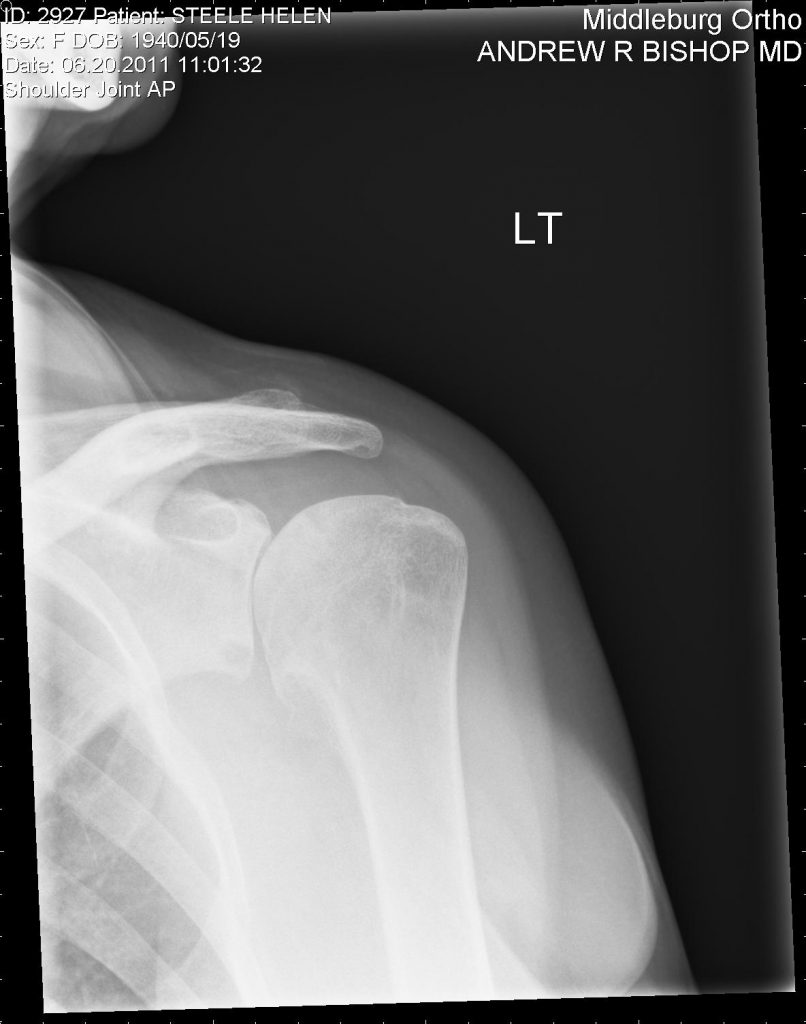
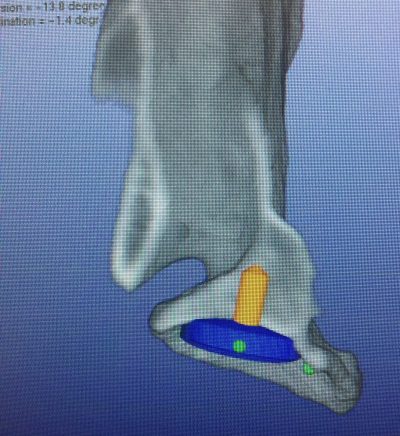
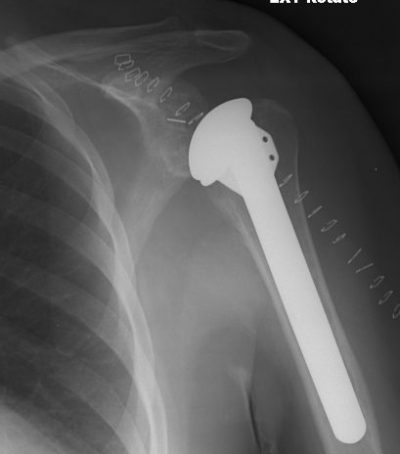
Osteoarthritis is a final common pathway of degenerative changes to the articular cartilage and bones of the joints in the body. When it occurs in the glenohumeral joint (ball-and-socket) of the shoulder, patents typically experience pain, motion loss, and progressive difficulty with activities of daily living and obtaining restful sleep. Conservative treatment is often quite effective with oral anti-inflammatories, activity modification, and selective use of corticosteroid injections. When patients have progression of the arthritis to a point where conservative management is no longer effective, consideration of Total Shoulder Replacement or Arthroplasty is a logical next step. If the Rotator Cuff is intact, a traditional Total Shoulder Replacement may be performed with a metallic replacement of the humeral head and a polyethylene or plastic replacement of the arthritic socket.
Workup/Images
The workup for patients with shoulder arthritis includes x-rays, an MRI to assess the rotator cuff, and typically a CT Scan with 3-Dimensional Reconstructions to specifically identify each patient’s individual deformity with the goal of tailoring their operation to meet their individual needs.
Surgery
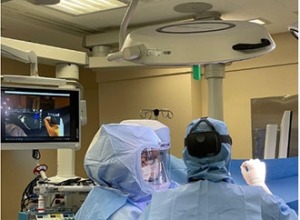
This patient undergoes an uneventful left total shoulder replacement and then returns approximately 3 years later for a right total shoulder replacement.
Result
Shoulder replacement is an excellent procedure with the ability to relieve pain, improve motion, and restore function. Our team works to avoid surgery whenever possible, but when necessary we coordinate care with a team of expert anesthesiologists using regional anesthesia and inter-scalene pain catheters as well as internists, cardiologists, and physical therapists to ensure the best possible outcomes.
Dr. Rudzki gives frequent presentations at Sibley Memorial Hospital – Johns Hopkins Medicine to the community and the orthopaedic surgical residents of The George Washington University School of Medicine on Shoulder Replacement. These interactive lectures review the different types of arthritis, surgical techniques including anatomic and reverse total shoulder arthroplasty as well as rehabilitation protocols.










Comments